
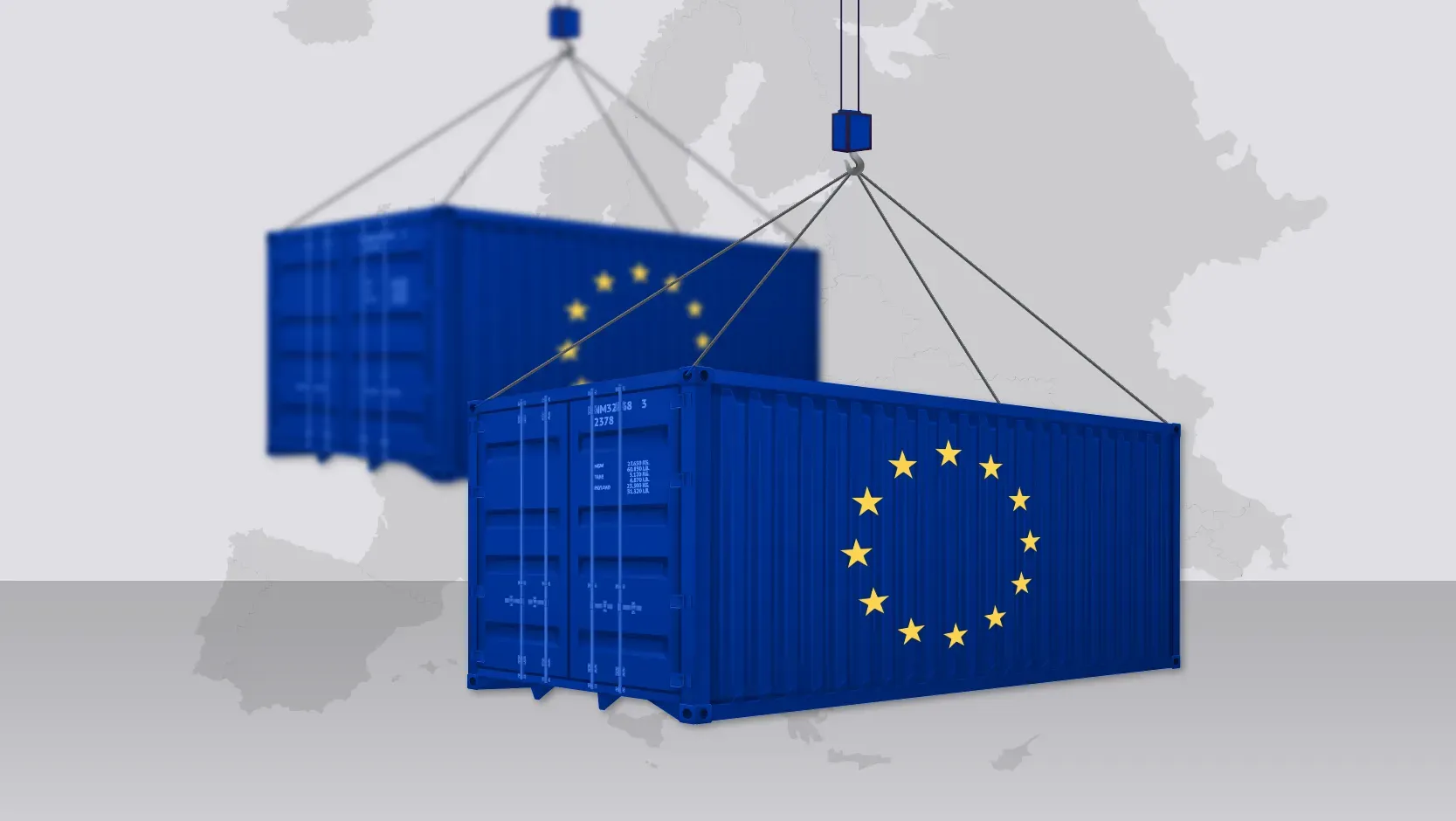
SWIDA Innovative carries out road transportation of goods not only within EU countries, but also to and from nearby countries with specific customs requirements such as the United Kingdom, Liechtenstein, Switzerland, Andorra, San Marino, Monaco, Norway, and Turkey. Let's take a look at the things you should be aware of while planning to work with a freight forwarder on transporting goods inside or outside of the EU to keep the process quick and efficient.
Documentation requirements
Despite the increasing shift towards electronic documentation, traditional paperwork remains a necessity when dealing with customs offices. Carriers must provide both electronic and non-electronic documentation, including digital invoices, packing lists, export declarations (EX-1), import declarations, T1 and T2 documents, and GMR documents. For transportation out of the UK, an EAD document may be required, and for importation, approval via a C88 document is necessary.
Invalid referral codes
For road cargo transportation out of the European Union, referral codes, often referred to as MRN (Movement Reference Number), are necessary to cross borders. These are generated by the customs declaration system to track the movement of cargo. Every single cargo shipment has its own referral code.
A common obstacle is the use of an incorrect code. Sometimes the correct data are replaced by older codes or simply confused with other codes, especially when someone is managing multiple transports at once. Having trouble with referral codes can become a crucial issue for the entire transportation process, with possible consequences including stopping the cargo transportation in progress.
Customs Clearance Delays
Customs clearance is a complex process that varies by country and type of cargo. For example, when exporting goods from the EU to Turkey, you must comply with Turkish customs regulations. This includes providing a detailed invoice and a Certificate of Origin. Any discrepancies in these documents can lead to delays.
Additionally, unexpected cargo and vehicle inspections can also cause hold-ups. For instance, if customs officials decide to physically inspect the goods, this can add several hours or even days to the clearance process. To avoid these delays, the carrier needs to ensure that all documentation complies with foreign customs policies.
ADR cargo transportation
In ADR cargo transportation, thorough preparation and specific documentation are crucial. Compliance with the European Agreement concerning the International Carriage of Dangerous Goods by Road is mandatory.
For instance, when transporting flammable liquids like gasoline, the transportation vehicle must display orange plates indicating dangerous cargo. The driver must hold a valid ADR training certificate proving they are trained in handling hazardous materials. In case of an accident or emergency, emergency action codes (EAC) must also be provided. These codes give instructions to emergency services on the actions to be taken in the event of an incident.
Non-compliance with these regulations can result in severe penalties, ranging from monetary fines to imprisonment. This is why you should only work with seasoned freight forwarding professionals experienced in ADR cargo transportation.
Further restrictions and limits within the EU
The borders of the EU are not the only place where specific restrictions and requirements apply. Some countries within the EU have their own set of rules and regulations regarding cargo transportation across their borders.
For instance, if you're transporting chemicals from Turkey to Germany, you must comply not only with the Turkish customs clearance process but also with the German Ordinance on the Transport of Dangerous Goods by Road, Rail and Inland Waterways (GGVSEB), and provide appropriate documentation, including a dangerous goods note and safety data sheet.
Another example is transporting certain agricultural products from outside the EU to France, such as wine. In this case, you must also comply with the French Customs Code, which requires specific documentation, including a VI-1 form for wine originating outside the EU.
Understanding these country-specific regulations is crucial for seamless transportation and avoiding delays or penalties.
When working with SWIDA Innovative, none of the above is a concern for you, since we handle all customs procedures using our long-term experience and up-to-date information about any particular changes in the process.

More Logistics Insights
 Integrated Freight & Customs: Why We Built a Dedicated Pillar for SWIDA CustomsWhen managing cross-border supply chains, moving physical cargo from point A to point B is only half the battle. The other half happens behind the scenes - at border crossings, ports, and terminals, where a single missing reference code or delayed declaration can stall an entire shipment.
 The Road to Greener Logistics: 4 Realities We Are Working Through in 2026Yesterday was Earth Day, and here at SWIDA Innovative, we are currently in the middle of our internal "Eco Week." Our team has been busy finding hidden eco-facts around the office, learning about proper recycling at our team workshop, and today we are actually heading out to clean up the neighbourhood around our building.
 Smart Tachographs for vehicles up to 3.5 tonnes. What are your solutions for express transport? (Part 2) ?In the first part of our article, we introduced the topic of smart tachographs and described the reality that awaits European logistics…